

Write a better script!!!
The INDEFINITE site has many posts covering the topic “write a better script”. For this post, only broad strokes will be covered.
Develop Better Characters & Backstory
Characters were but a whisper.
The key players Amber, Jonas, and Otto were locked in battle in a tiny kitchen. The atmosphere was tense. But their motivations were paper-thin.
The audience never had time to root for their win. Character arcs were shortchanged. Another 3–5 more minutes of screen time would crack open the storyline.
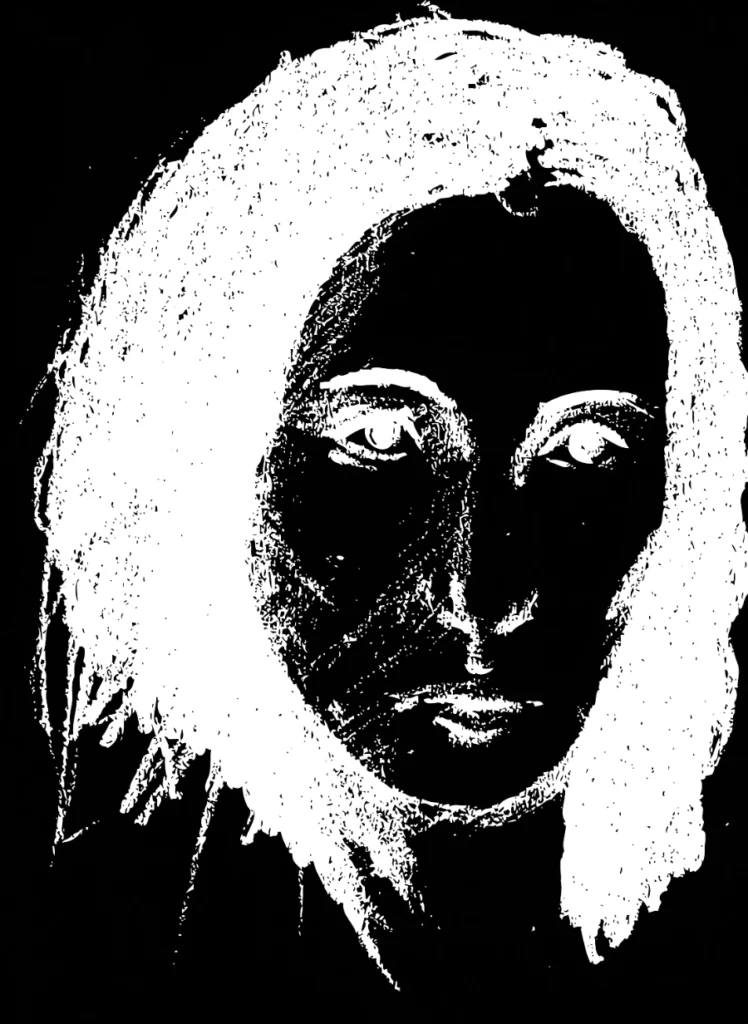
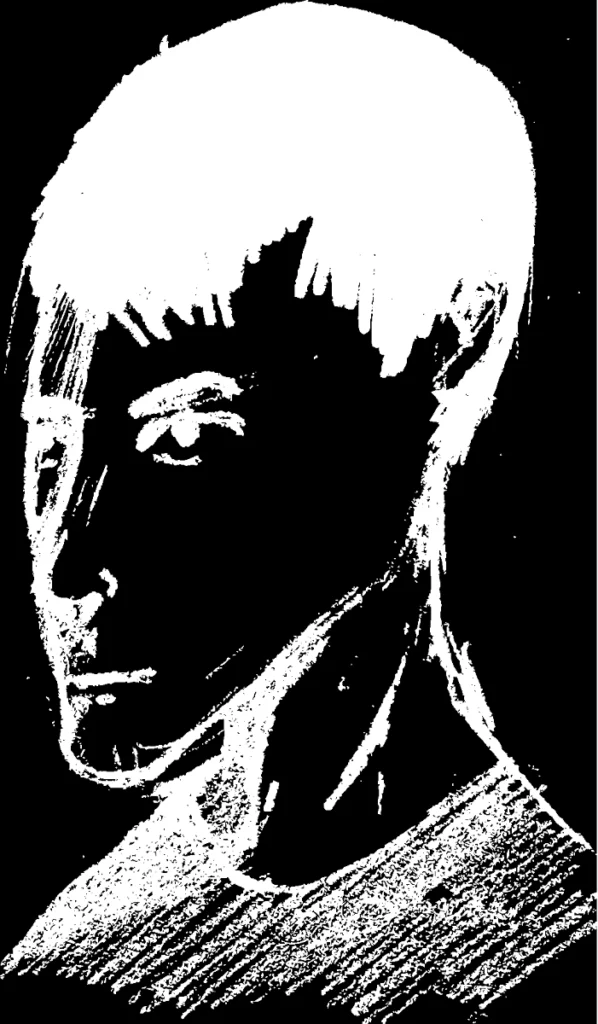
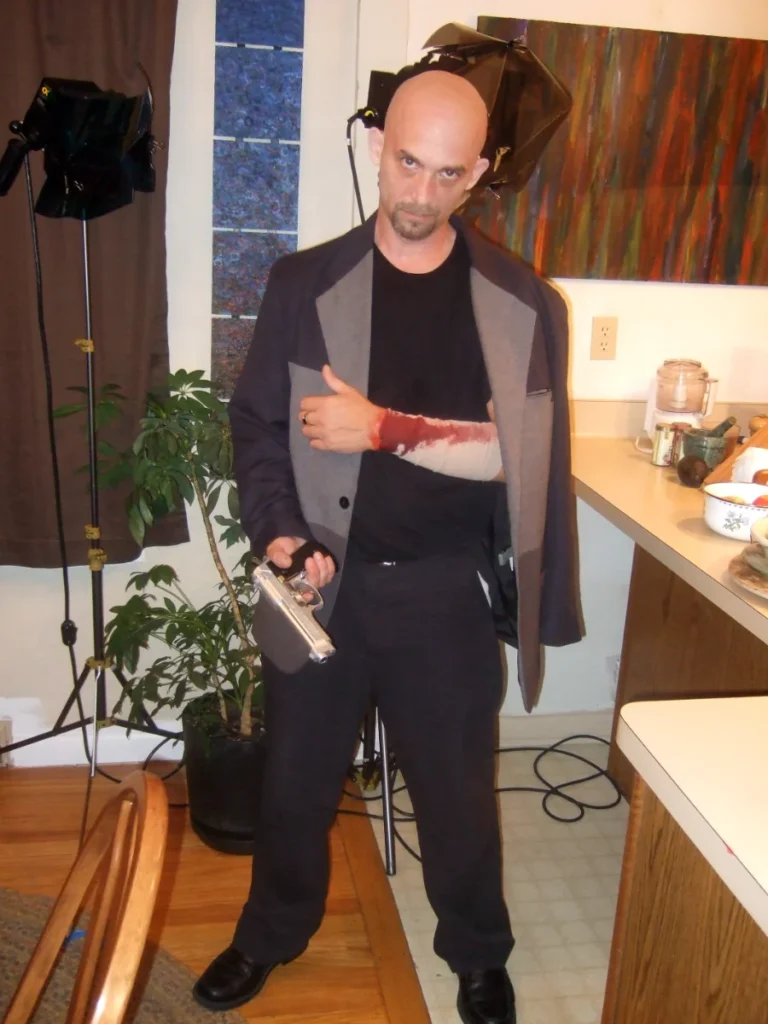
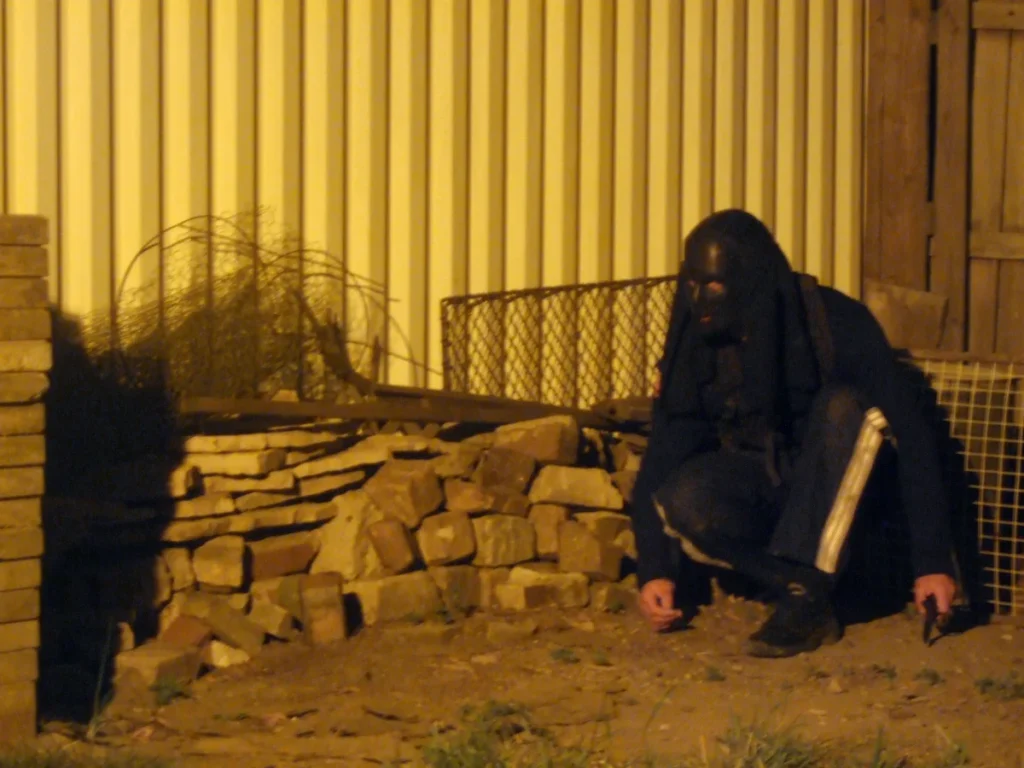
The origin of Otto’s bandaged bloody arm is left in the dark. The mystery played well in the script. But there was no fallout in the finished film. The pain needs to be twisted in Otto’s on screen portrayal.
Below is a photo of R. Michael Gull in his Otto costume. This was captured for continuity purposes.
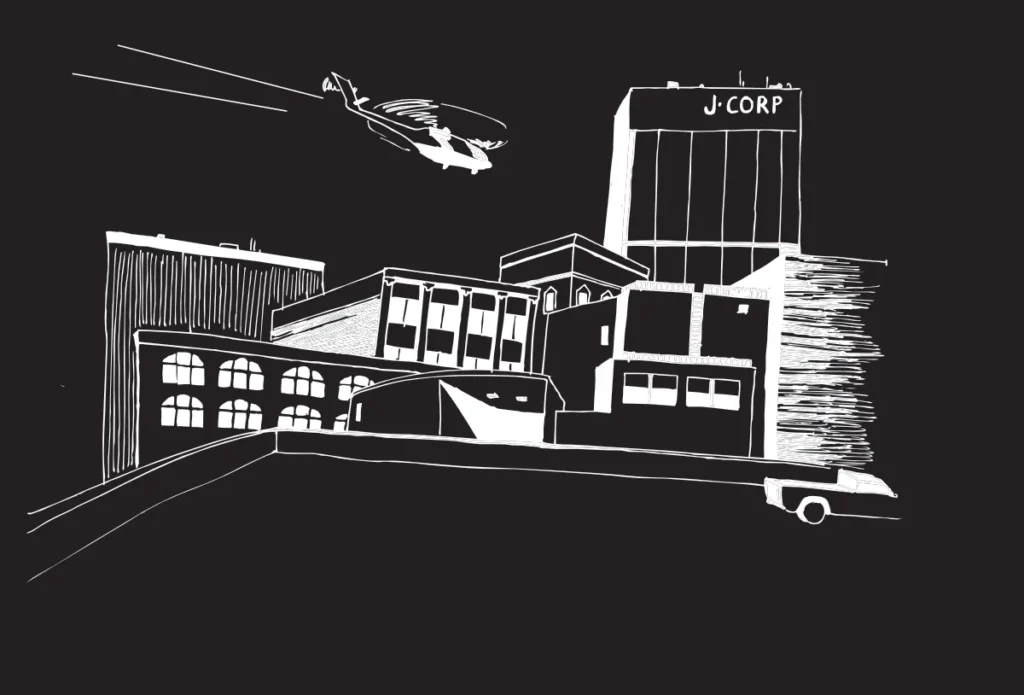
Otto and his crew need to hint at the threat from J-Corp. Otto’s life is in danger if he does not get the vials. J-Corp hides in the shadows pulling Otto’s strings. This story element was missing.
Write “More” & “Better” Dialogue
Not enough words. Not enough bite. Motivations fizzled from the characters’ words.
The kitchen scenes needed longer beats to simmer. A full story arc should be planned.
Chases are story engines. Every turn, every slam, should push the plot harder. Fill the chases with narrative. Use Otto in these scenes to drive the story forward. Pepper in soundbites from Otto’s crew asking questions.
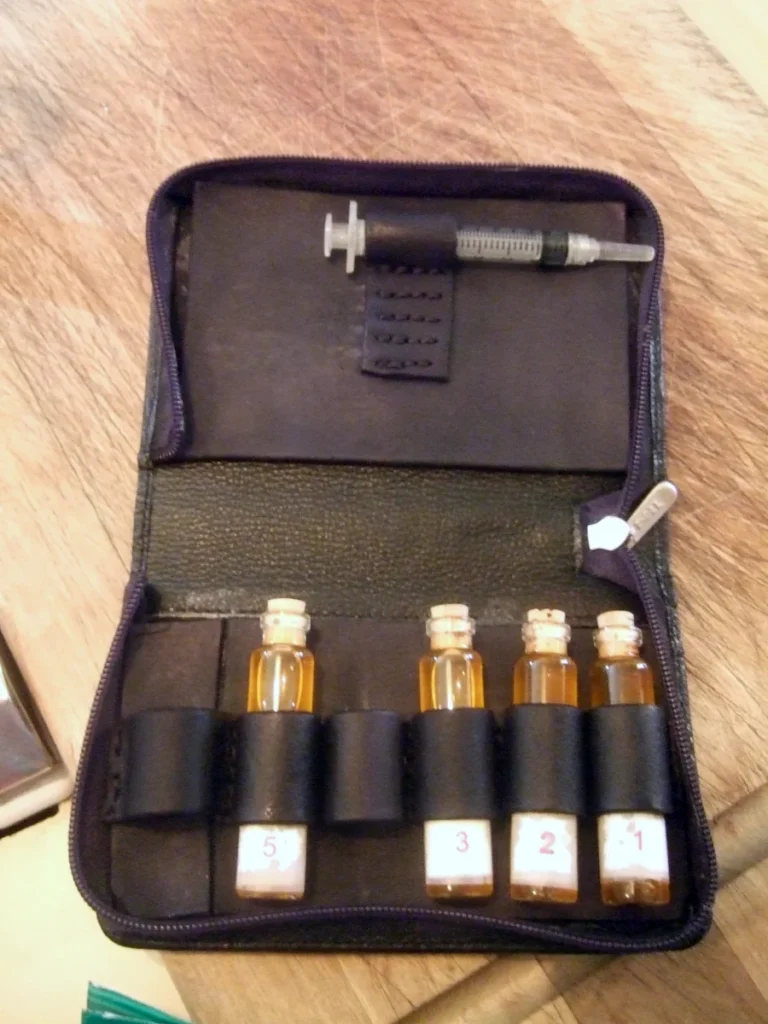
What are those orange vials?
Who’s the Man in the Mask?
Write More Story Scenes
Workshop 10–15 character-forging scenes.
Set them on fire—expand, contract, and cut the fat.
When the smoke clears, only keep a few gems. Erase the rest from the script.
Create A Better Ending Battle Royal
The final battle at Otto’s office needs pit bulls, not puppies.
We patched the squad together using friends. They were solid for a student shoot. The next level production demands killers from dojos, boxing pits, and MMA cages.
Recruit pros for a choreographed war. Rehearse it until the walls remember every hit. Then roll cameras and let the office burn.
Add More Comic Book Style Elements
Crank the comic-book elements. Build them. Break them. Keep only what hits.
Ideas to test:
- Kick off with a backstory blitz of an inked panel montage.
- Bend time: slow down critical hits, replay repeated fast strikes.
- Slash the frame with graphic speed lines.
- Add cutaway panels that spill secrets mid-fight.
- Run live action using diverse angles in side-by-side panels.
- Punch in on faces–see sweat, grit, and pupils blown wide in the melee.
- Brand the main characters with color codes as they roam scenes.
- Let characters grab objects on their path like “choose your own adventure”.
- Ex: A vending machine stuffed with murder toys. Pick a tool. Wreck the room. Rewind. Make a new pick. Wreck the room again…
Third Party Script Review
Recruit readers.
We need clean eyes with unbiased opinions. Readers who call the hits, flag the dead weight, and make the story lean.
Alternative Character Story Development Idea
Kick the project off with auditions.
Cherry-pick actors ready to begin at ground zero.
Sit down, swap war stories, and carve characters with real edge.
Write the script to their strengths.

Use A Sound Stage
Craft a modular set for the kitchen. Utilize movable walls and countertop set pieces.
Restrictions are lifted for lighting placement, cleaner sound recordings, and camera moves.
Creative fire is unleashed. Cameras can slip into shadows we could not reach before.
Pick A Light Plan
Lock a color style across the film.
Test each scene to get its own war paint. Splash magenta, yellow, orange—comic-book candy.
Start chases with midnight blue. Then we switch to a blood-red wash for the fight.
Carve shapes into the light with cucoloris (cookies). Use the symbol of the mask. Let the eyes pierce colors into the darkness of the alley.
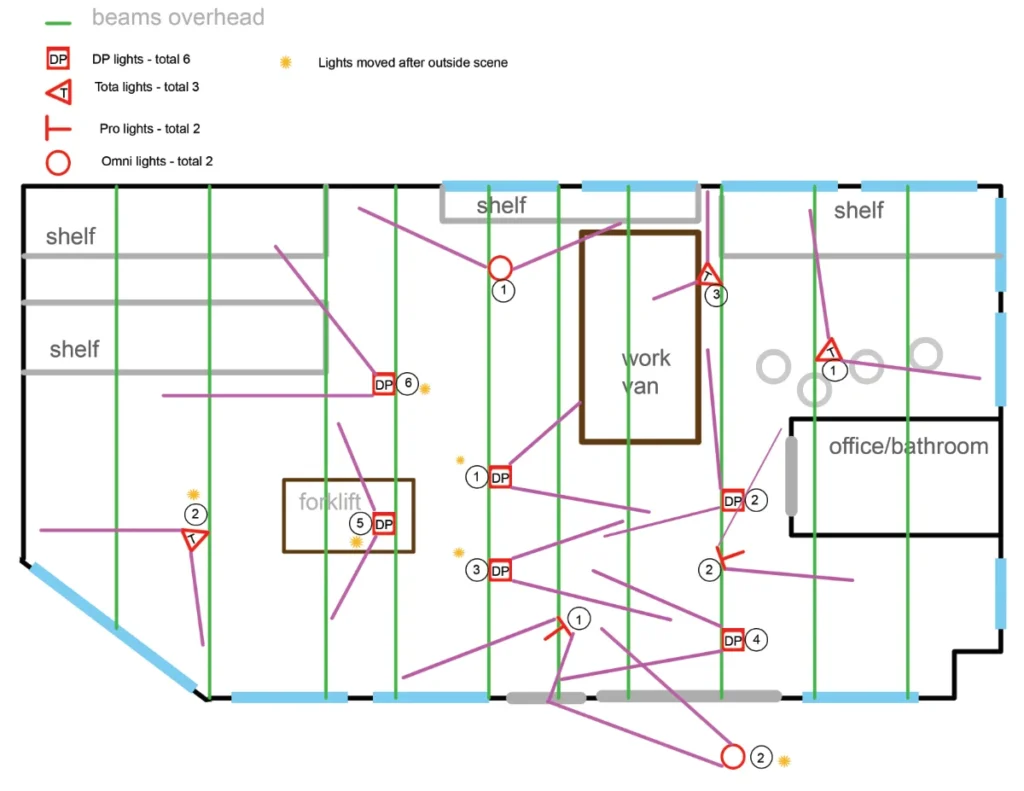
Below is a lighting plan for Otto’s “office”. The lights were set for practical lighting. The colors were randomly chosen on the night of production.
Rehearse
Rehearse–put the actors on their feet. Walk the rooms. Stress every line. See what thrives or wilts away. Run the scenes to improve the script.
The kitchen needed a stress test rehearsal run before production. Amber mid-argument with Jonas sees “Samantha” calling and drifts into small talk. Why? The switch had no stakes. The moment was cut in the edit.
Below is a comic book image of the character Samantha that was cut from the film.
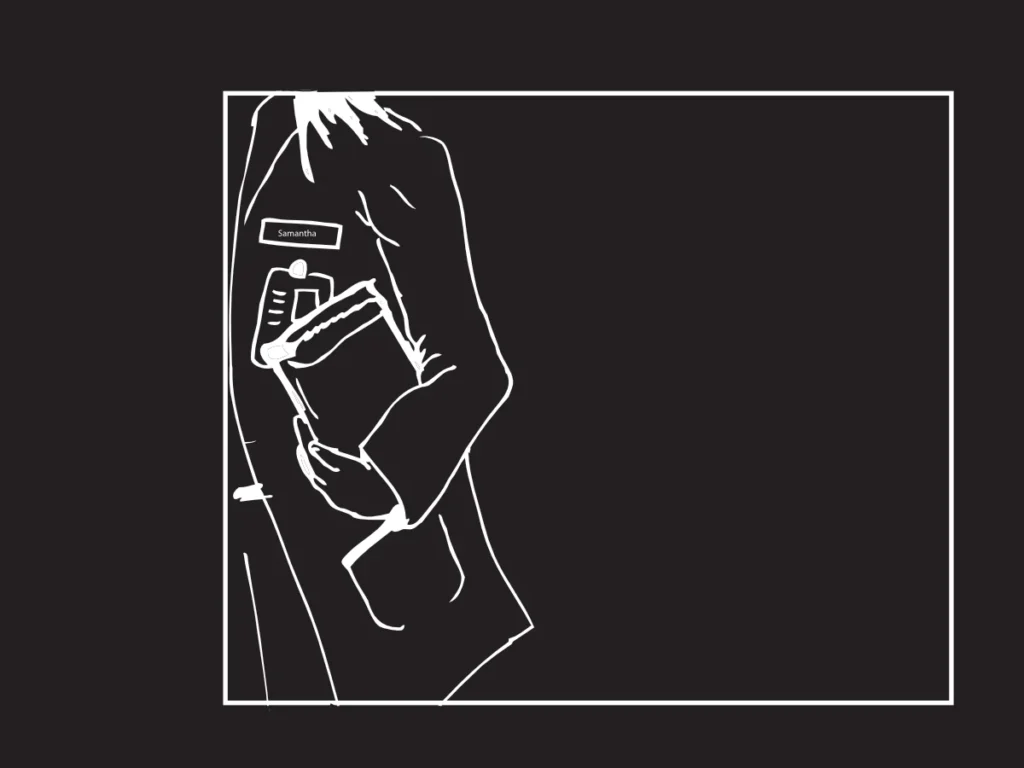
Actors would provide valuable feedback about their feelings in the scenes. Poorly written pages would be torn up. New lines would breathe life into the characters.
Set A Daily Schedule
Run the day with precision clockwork.
Lock a hard schedule: crew call, cast call, first shot, lunch, second wind, wrap. No day/night wasted. Let everyone know the clock.
Send the shot list early to the crew. Timing has improved. Crew morale is lifted. The group builds the strategy to improve their work. The end game is won.
Below is a breakdown sheet of the “ramp” scene that was dropped. The scene was turned into Otto’s “office”.
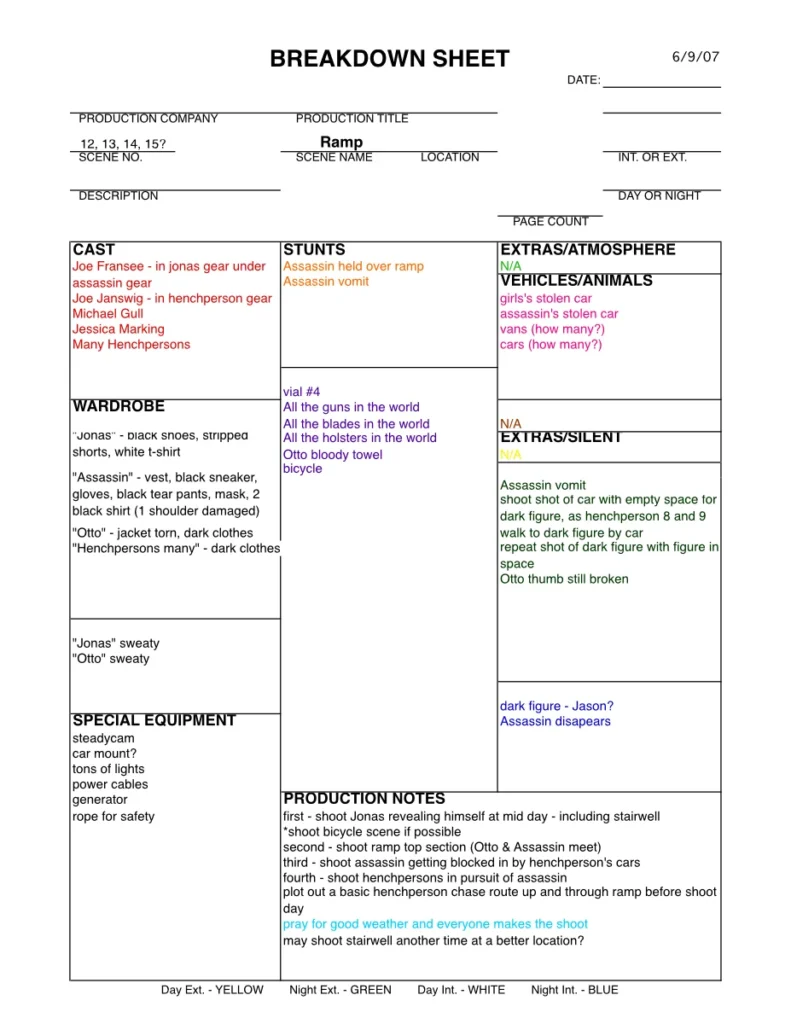
Many elements in the “ramp” breakdown scene were not carried over to Otto’s “office”.
Test Practical Effects
Stress-test every blood rig and smoke blast before the battle to make INDEFINITE. Film the tests. Time the setups. Write a “how to” card for each effect. Hand them out to the crew.
Appoint a SFX chief to run the chaos. Let them shine in the role to execute the plan cleanly.
Below is the lighting setup for the blood “throat slash” effect.
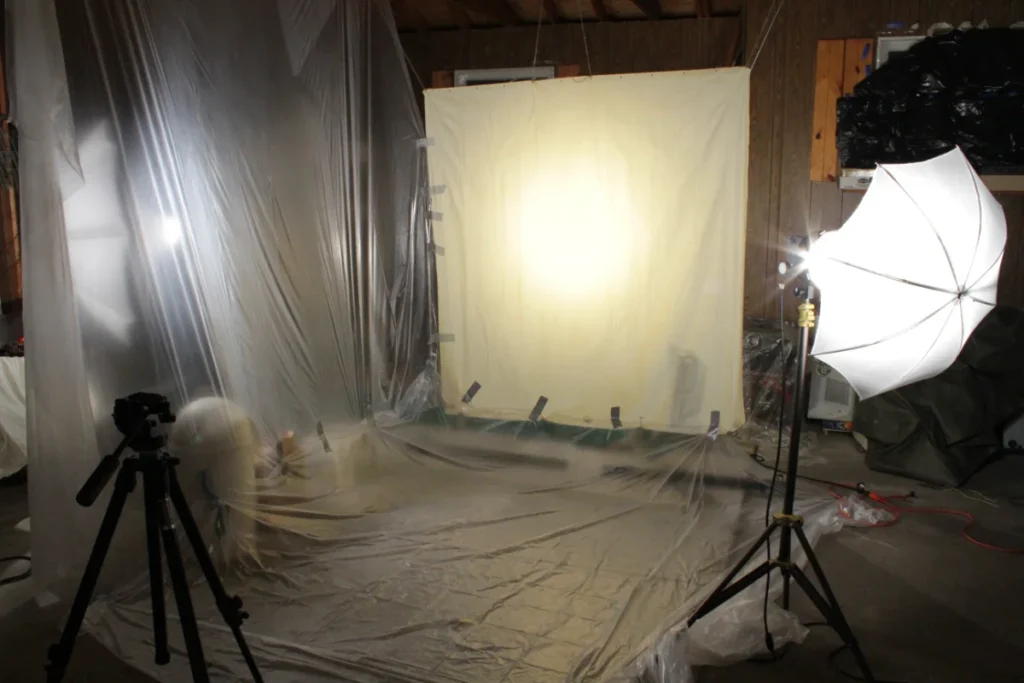
The plastic was excessive. A few drops of fake blood splattered on the ground.
Shoot & Edit A Test Script
Shoot a walkthrough of the script. We only need three: Co-director Christopher Kuiper, DP Dirk van Sloten, and myself.
Run a dry run. Christopher and I acted out the parts. Dirk hunts angles like a sniper using a handheld camera to fast-track the test.
Cut the footage into a rough-and-dirty previs. See what breathes, what dies, what hits like a crowbar.
The surviving moments are turned into storyboards and the shotlist.
Below is a test shooting checklist drafted before production.
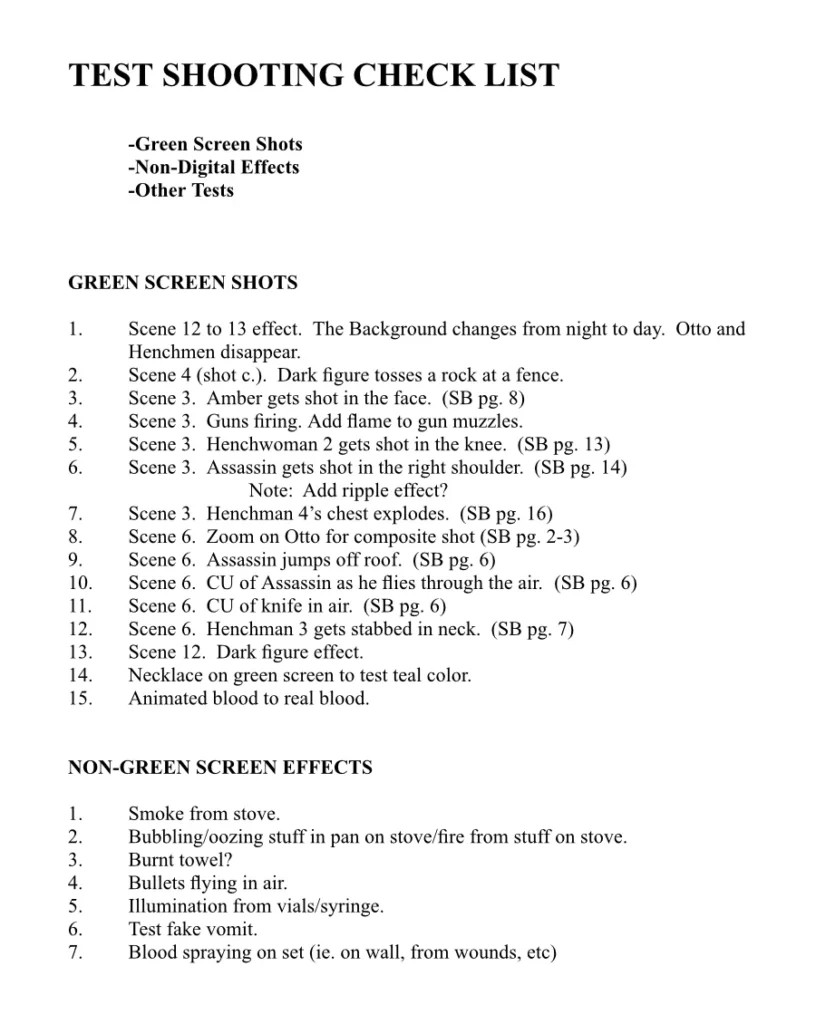
Time was against us to test the shots in the checklist. Many ideas were never seen again after they were written on this page.
Assign An Assistant Director
Christopher managed the role of AD, prop wrangler, and lighting grip. He had too many jobs. He had less time to focus on his primary role of co-director.
The fix–elevate a student to AD. Our crew was small but they were hungry to learn. Hand over the slate and the schedule. Let them shine in the role.

Assign An Art Director
Hand off the Art Director badge to another student to crush the role.
The Kitchen setup was clunky and slow. Props and gear scattered through the basement. Let the Art Director lock down the disorder.
Below is a shooting schedule prop list for days 1 & 2.
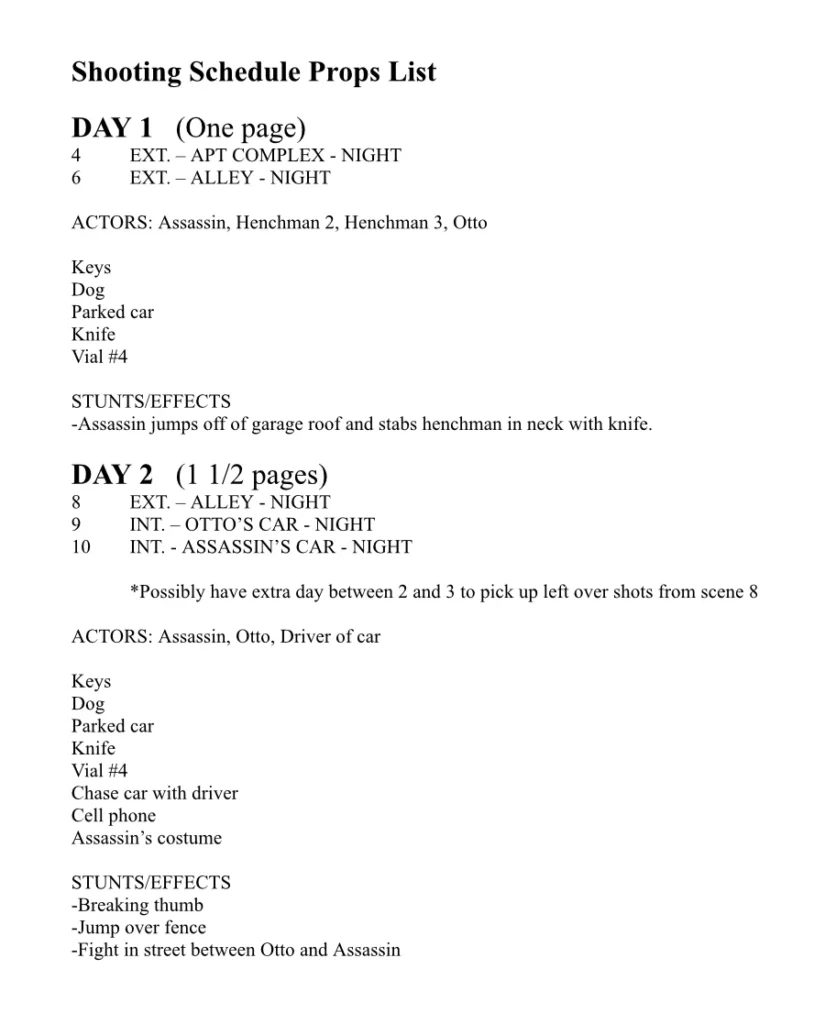
Christopher or I kept the props in our cars. The main variable was how many film lights we needed.
P.S. I know—Art Directors don’t babysit gear. Our small film could lean on one person to absorb the prop master and gaffer duties.
Script Supervisor
Assign a script supervisor with a clipboard and the script. Log shots, slate, and carve razor-sharp notes. The continuity would keep the production machine running on its rails.
Between setups let them pull out a camera for behind the scenes highlights. Now we amplified the promo content.
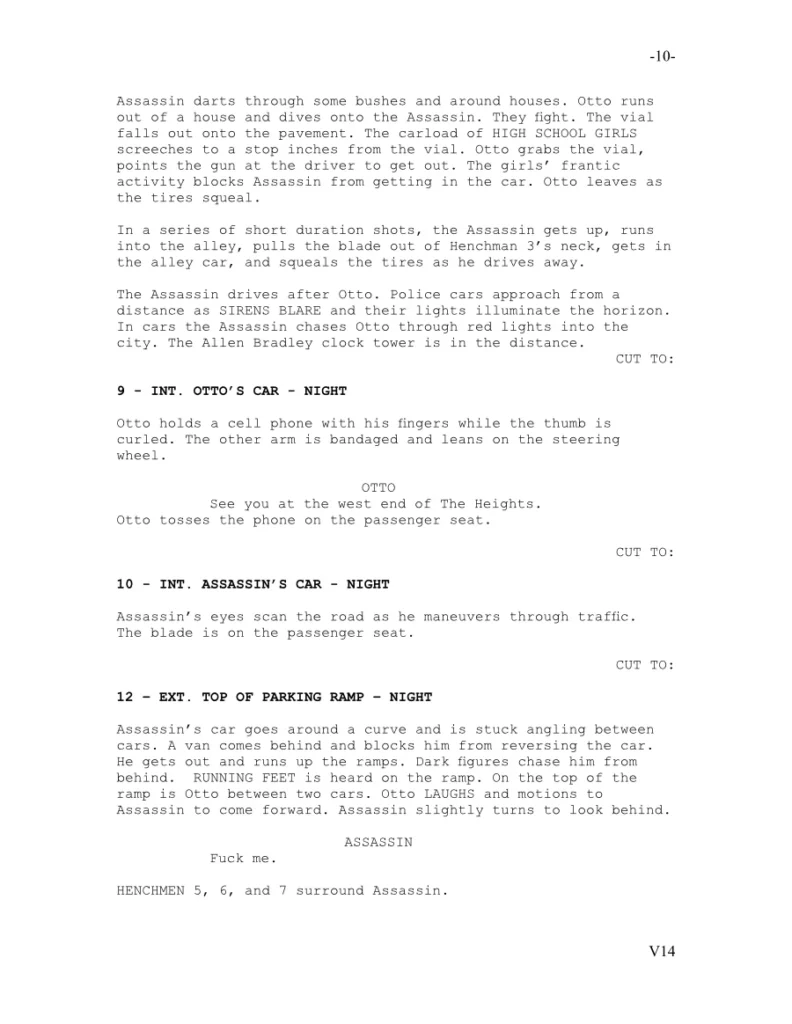
Below is a page from the final written script of INDEFINITE. See how many blocks of text are in the script with so few lines of dialog.
Plan A Budget
Whatever was spent was on the fly. Food, props, and other stuff was not tracked.
Set a budget. Know the numbers to plan future productions.
Improve Location Scouting
We called in all the favors to find locations. It was exhausting. Christopher and I emailed, called, and drove around seeking prime locations.
Put money on the table. Send a location scout to embrace the challenge. Our days would be free to improve the production.
Final Thoughts About A Do-Over
Most of these ideas are reflections almost 20 years after filming INDEFINITE. Back then Christopher and I wore every hat on set—director, fixer, and gear mule.
No budget. Volunteers only. Mostly everyone was a student or came with no experience. The big exceptions were Dirk behind the lens and Sara Smudzinski painting faces.
The bulk of the big changes start with writing better pages in the script. Follow that with ruthless rehearsals. And finally train the crew for their roles.
INDEFINITE would be 5x better with a locked in plan.